Thread Count Myths: What Really Drives Sheet Quality
Thread count myths debunked for hotel buyers. See how inflated counts get faked and what actually determines luxury hotel sheet quality.
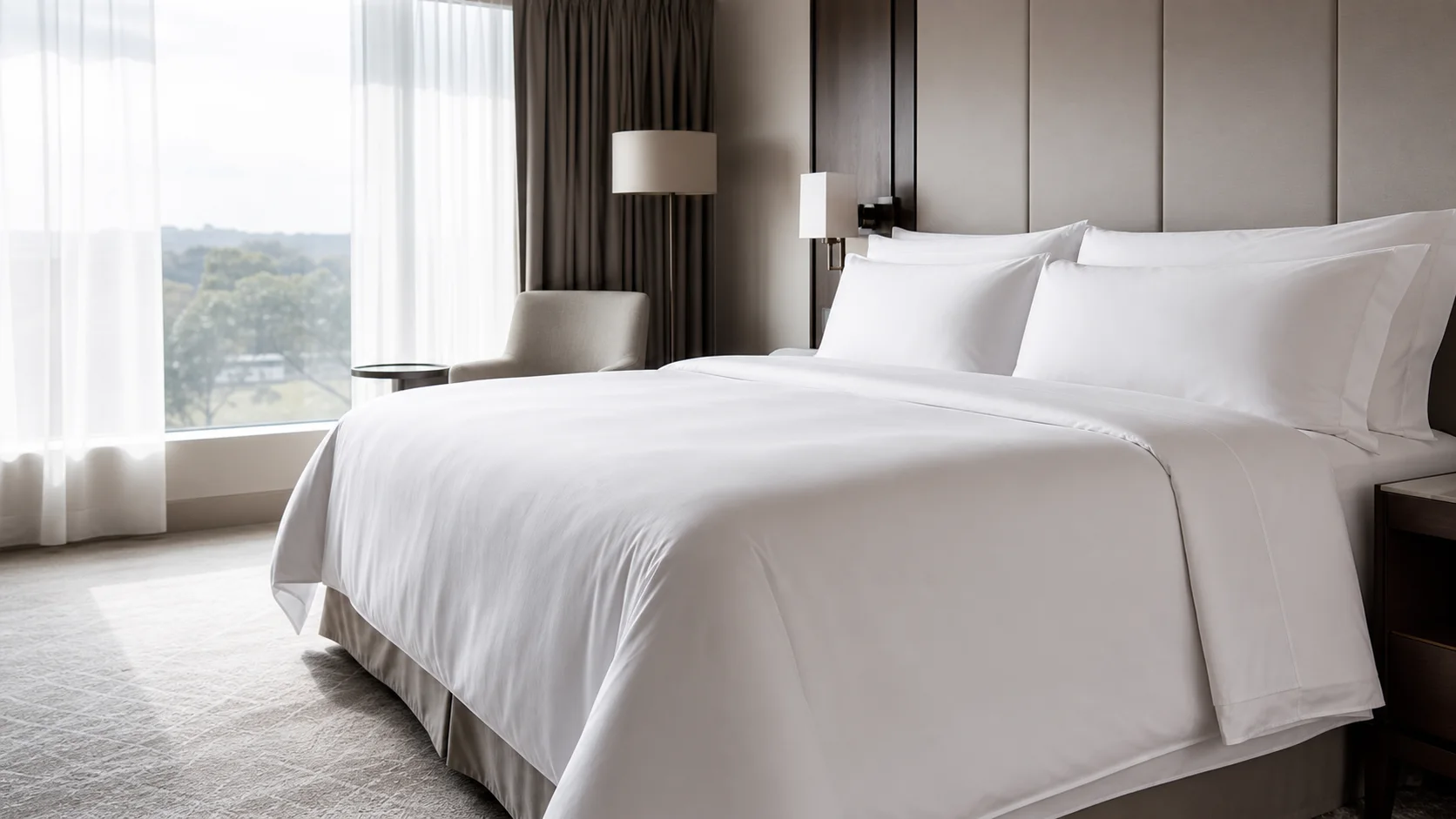
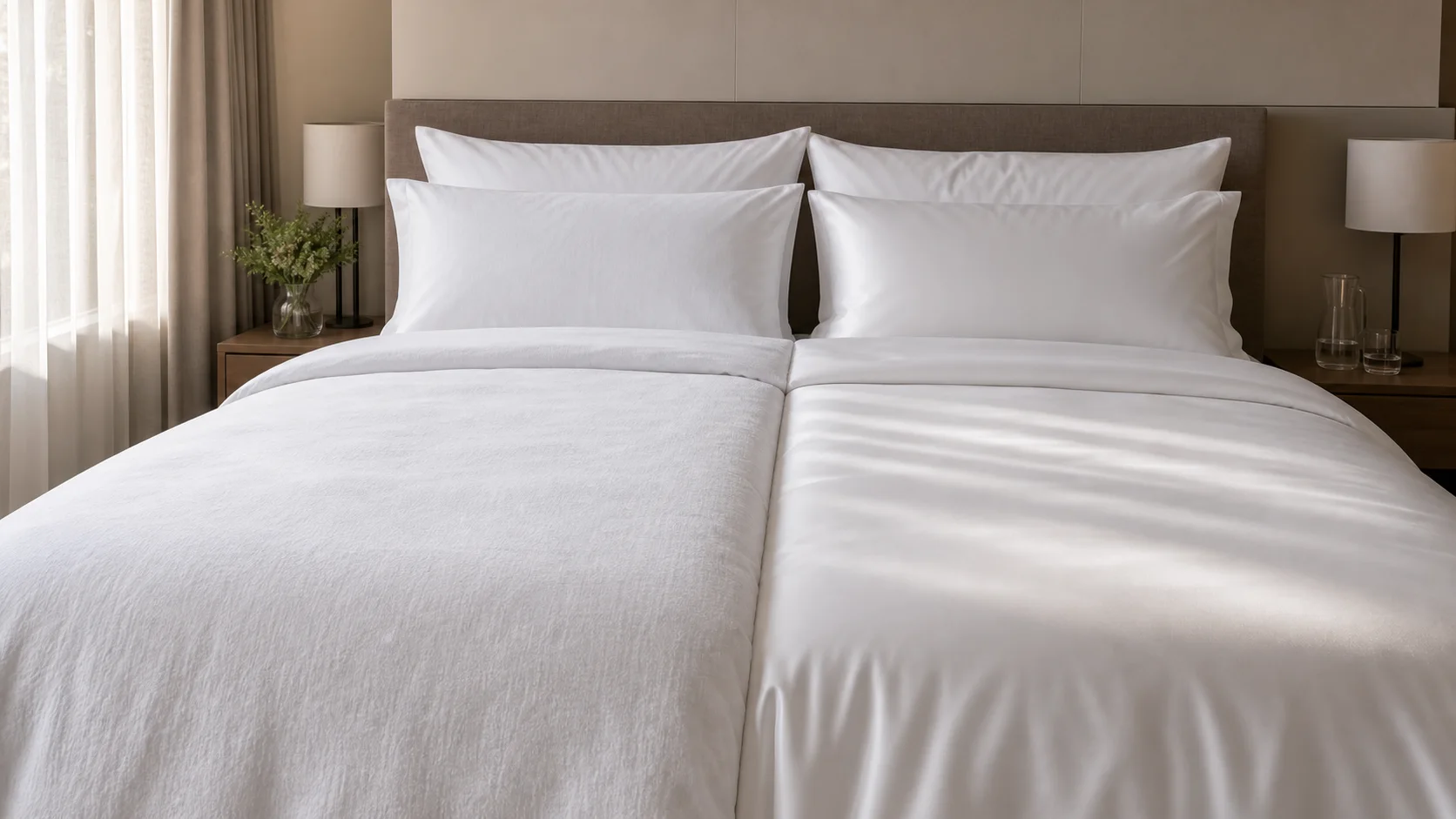
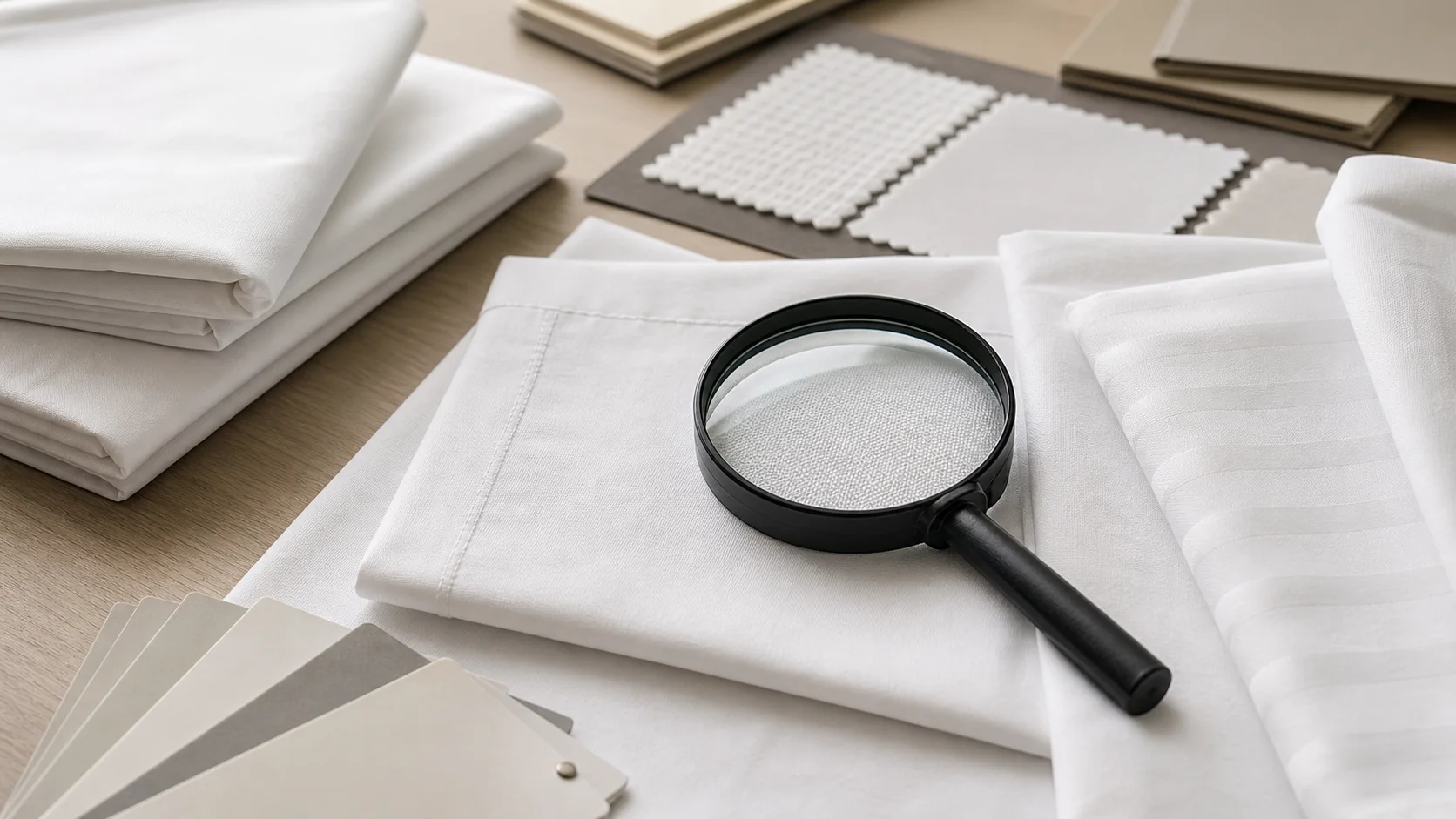
Materials and operations, shown together.
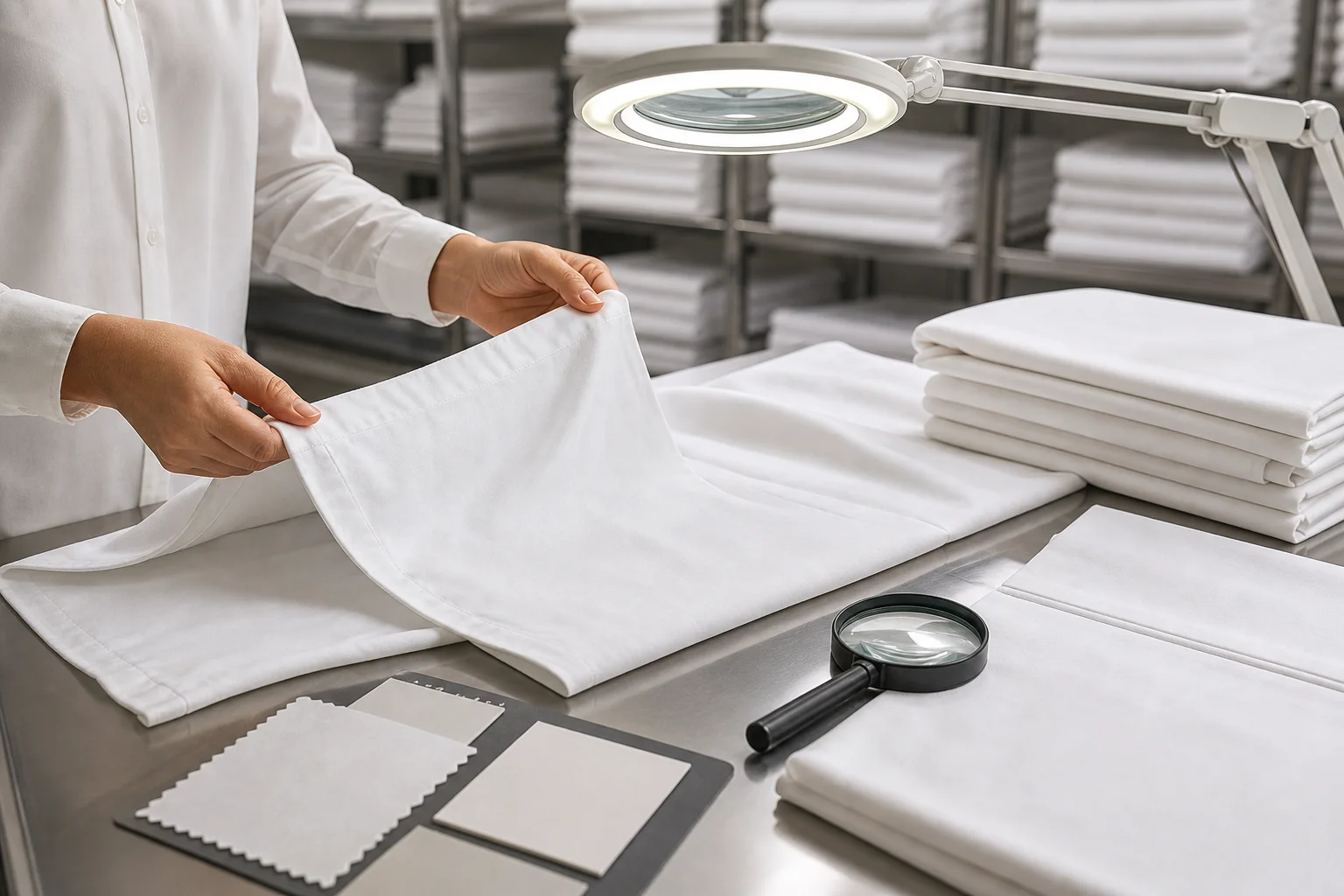
Product detail and back-of-house context help connect each specification choice to how the item looks, launders, stores, or survives service.
Thread Count Myths: What Actually Determines Hotel Sheet Quality
Thread count is the most quoted number in bedding and the most misleading. A label boasting “1500 thread count” sounds like the top of the luxury ladder. In pure single-ply cotton, that number is physically impossible. If your procurement team trusts the headline figure, you’re handing yourself one of the easiest ways to overpay for a sheet that pills, thins, and lets guests down within a season.
So let’s separate the marketing from the material science. I’ll explain what thread count actually measures, show you how inflated counts get manufactured, name the factors that genuinely decide quality, and hand you a buyer’s checklist for judging sheets without trusting the number on the package.
Key Takeaways
- Thread count is warp + weft threads per square inch. The catch: the way some mills count multi-ply yarns lets them inflate it artificially.
- Counts above roughly 800 to 1000 in pure single-ply cotton are physically implausible. A “1500TC” sheet is almost always multi-ply marketing math, not a finer fabric.
- Fiber quality beats thread count. Long-staple cotton (Egyptian, Pima, Supima) decides durability and softness more than any number.
- The realistic sweet spot is 200 to 400 for percale and 300 to 600 for sateen in commercial hotel use. Higher is not automatically better.
- Judge by feel, weight, light test, and supplier specs. The headline figure alone tells you almost nothing.
What Thread Count Actually Means
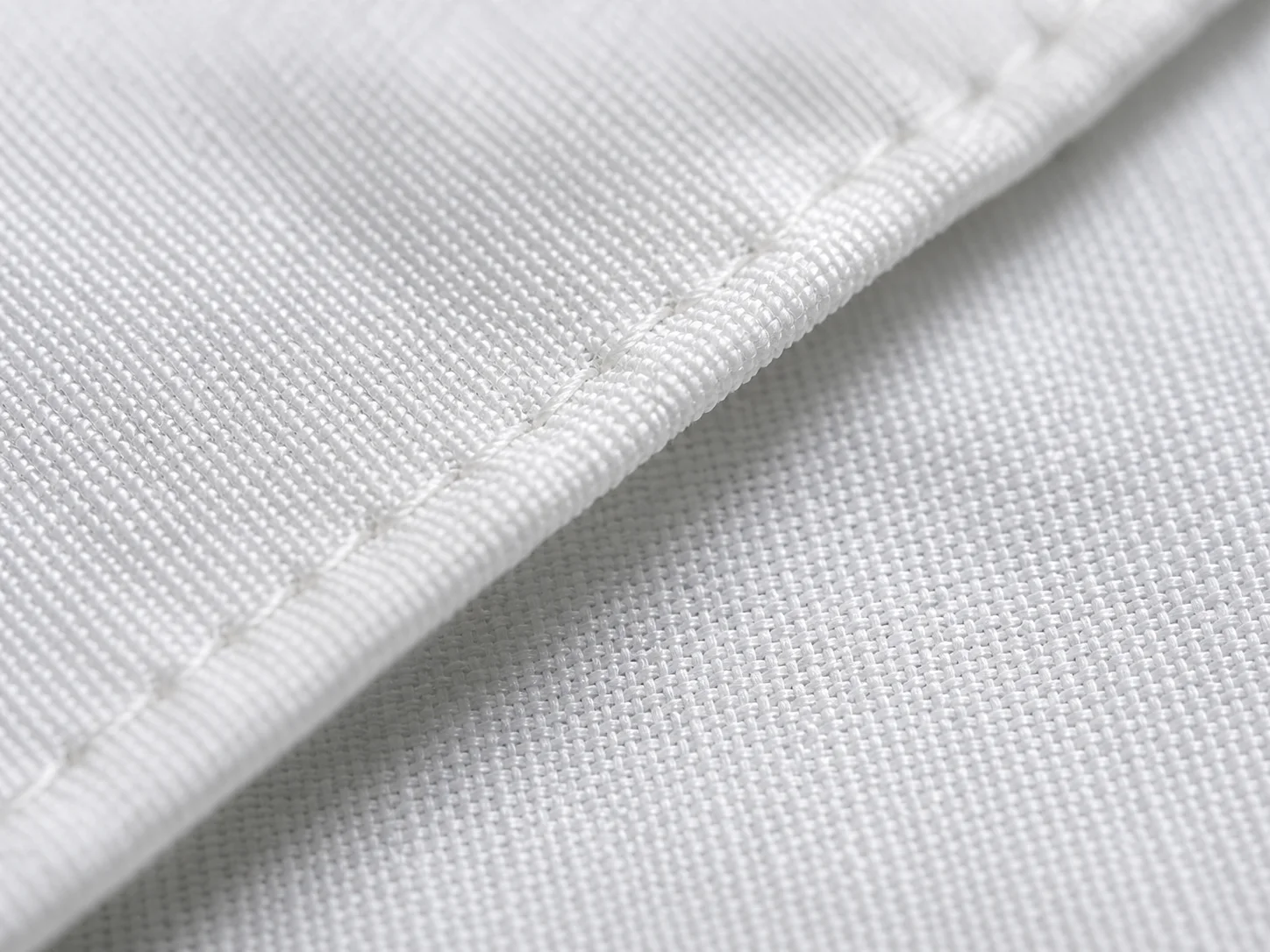
Thread count is a simple measurement: the number of threads woven into one square inch of fabric, counting both directions. Threads running lengthwise are the warp. Threads running crosswise are the weft (also called the filling or pick). Add the two together and you have the thread count.
Take a genuine percale sheet with 100 warp threads and 100 weft threads per square inch. That’s a thread count of 200. It’s an honest, single-ply construction, and it produces a crisp, durable, breathable sheet that holds up to industrial laundering.
The trouble starts when mills look for ways to make that number bigger without weaving a finer cloth.
How Inflated Thread Counts Are Manufactured
Higher numbers sell. So the industry developed several techniques to inflate thread count without improving the actual fabric, and often while degrading it. Understanding these methods is the single most useful defense a buyer has.
Multi-Ply Yarns Counted as Multiple Threads
A single yarn can be spun from one strand (single-ply) or from several thinner, lower-grade strands twisted together (two-ply, three-ply, or more). Some mills count each ply as a separate thread. So a sheet woven at a true 300 thread count using two-ply yarn gets marketed as “600 thread count.” Switch to four-ply and that same physical cloth becomes “1200.”
Here’s the part they don’t print on the label: those thinner plies are usually made from shorter, cheaper fiber. The headline number doubles or quadruples while the fabric quality drops.
Picks Counted as Plies (Inserted Picks)
Another trick inserts extra weft yarns, sometimes thin, weak filler “picks,” purely to raise the count. These inserted picks add to the number on the label but contribute little to strength or hand feel, and they can leave the fabric denser, heavier, and less breathable.
Numbers Above ~800 to 1000 in Pure Cotton Are Implausible
There’s a physical ceiling. To fit more genuine single-ply threads into a square inch, each thread has to be finer. Beyond roughly 800 to 1000 threads per square inch, single-ply cotton yarns get too fine to weave durably at commercial scale, and too fine to survive hotel laundering. So when you see 1200, 1500, or 1800 advertised on a cotton sheet, it’s virtually always ply-counting math, blended synthetic content, or both. It is not a finer, better cloth.
Rule of thumb: If a cotton sheet claims a thread count above ~1000, treat the number as a marketing artifact and ask the supplier for the single-ply count and fiber spec instead.
What Actually Determines Hotel Sheet Quality
If not the headline number, then what? Quality is the product of several factors that rarely make it onto a hangtag. They’re exactly what your procurement team should be asking about.
Fiber and Staple Length
Staple length is the length of the individual cotton fibers, and it’s the foundation of sheet quality. Long-staple and extra-long-staple cottons (the category that includes Egyptian, Pima, and Supima) spin into stronger, smoother, more lustrous yarns with fewer exposed fiber ends. The result feels softer, pills less, and lasts longer through repeated commercial washing. Short-staple cotton does the opposite. It sheds more, weakens faster, and roughens over time no matter what the thread count says.
Yarn Quality and Ply
A well-made single-ply yarn spun from long-staple cotton beats a multi-ply yarn spun from short fibers, even at a lower thread count. Single-ply construction is generally the mark of a quality sheet. Multi-ply is often a sign that thinner, cheaper strands have been twisted together to bulk up the number.
Weave
The weave structure shapes how a sheet feels and performs. Percale is a tight, one-over-one-under plain weave: crisp, matte, breathable, and exceptionally durable. Sateen uses a three-over-one-under (or similar) float weave that exposes more surface yarn, giving a silky sheen and warmer drape at the cost of slightly less durability. Neither one is “better.” They suit different guest experiences and climates. (See our dedicated comparison: percale-vs-sateen-hotel-sheets.)
Finishing
How fabric gets treated after weaving matters as much as the weave itself:
- Combing removes short fibers and impurities before spinning, producing smoother, stronger yarn.
- Mercerization treats cotton under tension to increase strength, luster, and dye uptake.
- Sanforization pre-shrinks the fabric so finished sheets hold their dimensions through laundering. That’s critical for par-stock consistency.
GSM and Fabric Weight
Grams per square meter (GSM) measures fabric weight and density. It’s often a more honest indicator of substance than thread count, because you can’t game it by ply-counting. A heavier, denser percale or sateen generally signals more material and a more substantial hand. Just balance that weight against breathability for guest comfort.
Construction Integrity
Finally, the details that survive hundreds of wash cycles: tight, even stitching; reinforced hems; secure deep-pocket corners on fitted sheets; and colorfast, low-bleed dyeing. A high number means nothing if the seams fail after three months of housekeeping turnover.
The Realistic Thread-Count Sweet Spot for Hotels
Within honest single-ply construction, there are industry-typical ranges where cotton sheets deliver the best balance of softness, durability, and value for commercial use. Treat these as practical reference ranges, not absolute rules:
| Weave | Typical hotel sweet spot | What you get | Diminishing returns above |
|---|---|---|---|
| Percale | 200 to 400 | Crisp, cool, breathable, very durable | ~400, where extra threads add cost, not performance |
| Sateen | 300 to 600 | Silky, lustrous, warmer drape | ~600, where higher numbers usually mean multi-ply |
| Marketing claims | 800 to 1800 | Inflated ply math, often blended fiber | Treat as a red flag, not a feature |
The takeaway: a 300 thread count percale in long-staple cotton will outperform an “1000 thread count” sheet of multi-ply short-staple fiber on every metric that matters to a hotel. Softness retention, durability, guest perception, all of it.
Marketing Claim vs Reality
| Marketing claim | The reality |
|---|---|
| “1500 thread count for ultimate luxury” | Physically impossible in pure single-ply cotton; almost always ply-counted or blended |
| “Higher thread count = softer and better” | Only true up to a point; fiber quality and finishing matter more |
| “Egyptian cotton” on the label | Meaningless without staple-length proof; the term gets used loosely |
| “Hotel quality 800TC” | Many luxury hotels use honest 300 to 400TC long-staple percale or sateen |
| “More threads = more durable” | Past the weave’s optimal density, extra threads can cut breathability and strength |
| “Premium because it’s heavy and dense” | Inserted filler picks add weight without adding quality |
How to Evaluate Sheets Without Trusting the Number
When you’re sourcing for a property, put the hangtag aside and run this checklist instead:
- Feel it. Quality long-staple cotton feels smooth and substantial, not papery or slick. A slippery, overly soft “out of the bag” feel can mean chemical softeners that wash out.
- Hold it to the light. A dense, evenly woven sheet shows a consistent weave with no thin or cloudy patches. Irregularity signals poor construction.
- Weigh it (GSM). Ask for the GSM. It’s harder to fake than thread count and gives an honest read on substance.
- Ask for the single-ply count and ply. Request the actual single-ply thread count and confirm whether the yarns are single- or multi-ply. A transparent supplier will give you both.
- Confirm fiber and staple length. Ask specifically for long-staple or extra-long-staple cotton, not just “100% cotton.”
- Request the spec sheet and certifications. Look for documented fiber content, weave, finish, and recognized certifications such as OEKO-TEX STANDARD 100 for tested-safe textiles. (More on what to look for: hotel-textile-certifications-explained.)
- Order a sample and launder it. Wash a sample 5 to 10 times on your property’s industrial cycle before you commit. How a sheet survives real laundering tells you more than any number on the box.
Frequently Asked Questions
Is a higher thread count always better for hotel sheets? No. Thread count only correlates with quality up to a point, and only within honest single-ply construction. Beyond roughly 400 for percale and 600 for sateen, higher numbers usually reflect ply-counting tricks rather than a finer fabric. Fiber quality and finishing matter far more.
What is a good thread count for luxury hotel sheets? Many luxury properties use long-staple cotton in the 300 to 400 range for crisp percale and 300 to 600 for silky sateen. These ranges deliver the best balance of softness, durability, and value under commercial laundering.
How can a sheet claim 1500 thread count? By counting each ply of a multi-ply yarn as a separate thread, or by inserting extra filler picks. A genuine 375 single-ply count made from four-ply yarn can be marketed as “1500.” It’s a labeling technique, not a finer cloth.
Does thread count matter more than fiber? No. Staple length and fiber quality are the foundation of a good sheet. Long-staple cotton at a modest thread count outperforms short-staple cotton at a high count on softness, pilling resistance, and lifespan.
What is the difference between single-ply and multi-ply sheets? Single-ply uses one yarn per thread, typically spun from longer, higher-grade fiber. Multi-ply twists several thinner, often shorter strands together, frequently to inflate the thread count. Single-ply long-staple cotton is generally the mark of a quality sheet.
Is GSM a better measure than thread count? GSM (fabric weight) is often a more honest indicator because you can’t game it by ply-counting. Paired with confirmed fiber and weave, it gives a clearer read on a sheet’s substance and durability.
Thread count is a starting point, not a verdict. Once you know how the number gets inflated and which factors actually decide quality, you can specify sheets that feel premium to guests and survive years of commercial laundering, without paying for marketing math.
If you’re sourcing bed linen for a new property or refreshing par stock, request fabric samples, a product catalog, or a custom quote from a hospitality supplies supplier. Specify the fiber, weave, GSM, and certifications you need, and let the materials, not the hangtag, make the case.
Internal links: percale-vs-sateen-hotel-sheets, hotel-textile-certifications-explained, how-to-choose-hotel-bed-linen