Hotel Linen Par Stock Guide: How Much to Order
Calculate hotel linen par levels with the 3-par and 4-par rule, plus replacement cycles, shrinkage allowance, FIFO rotation, and storage tips.
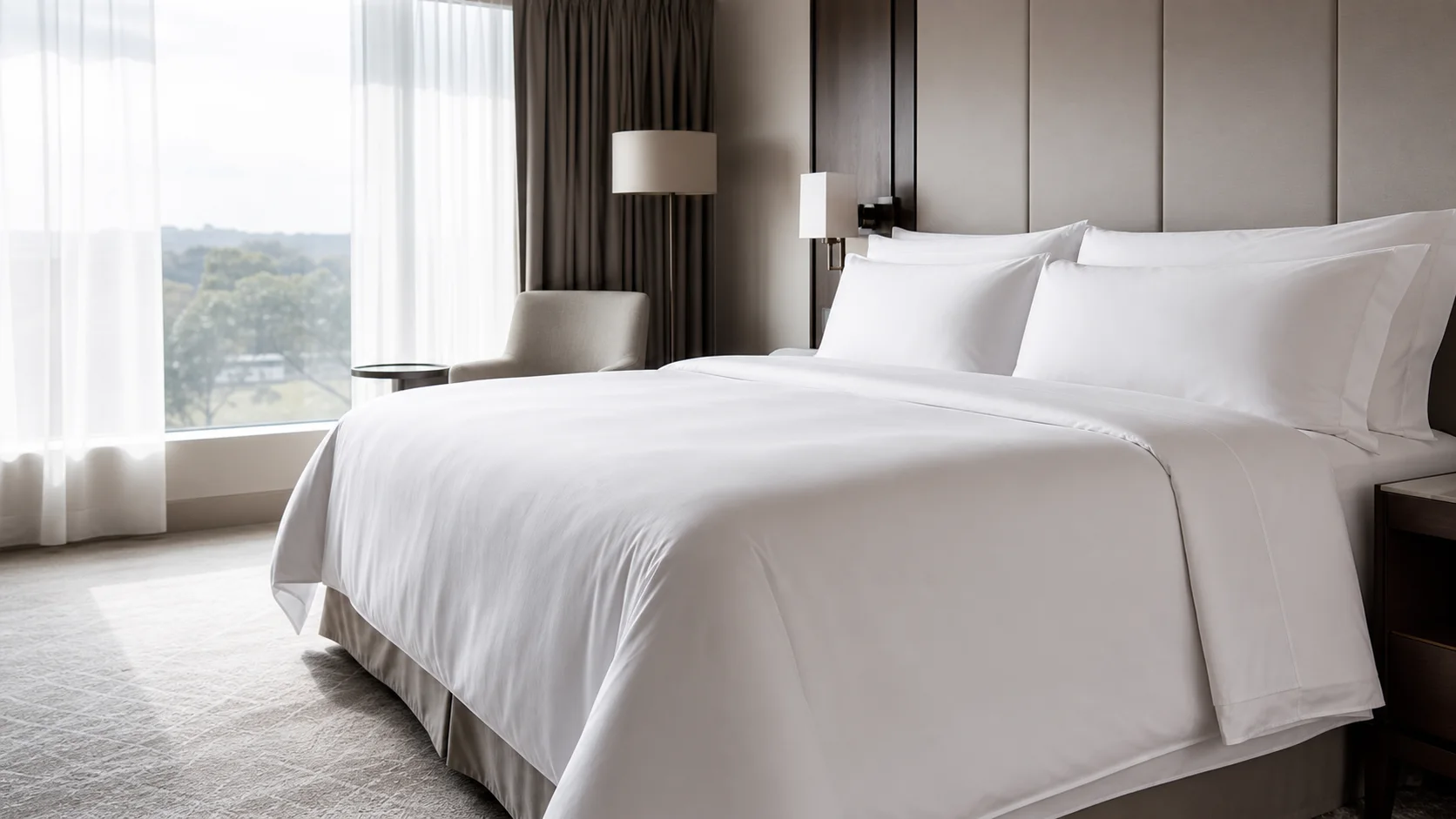
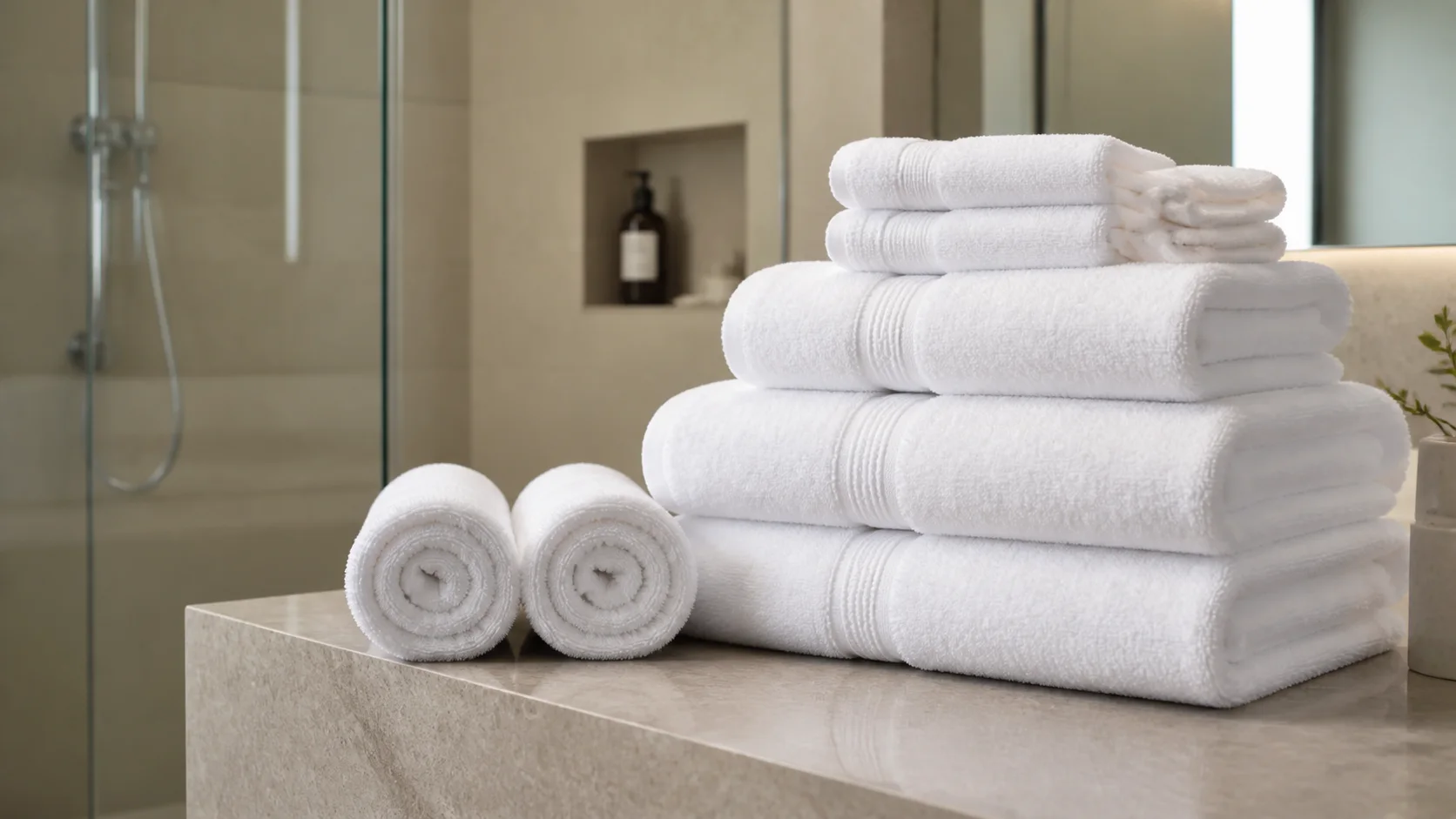
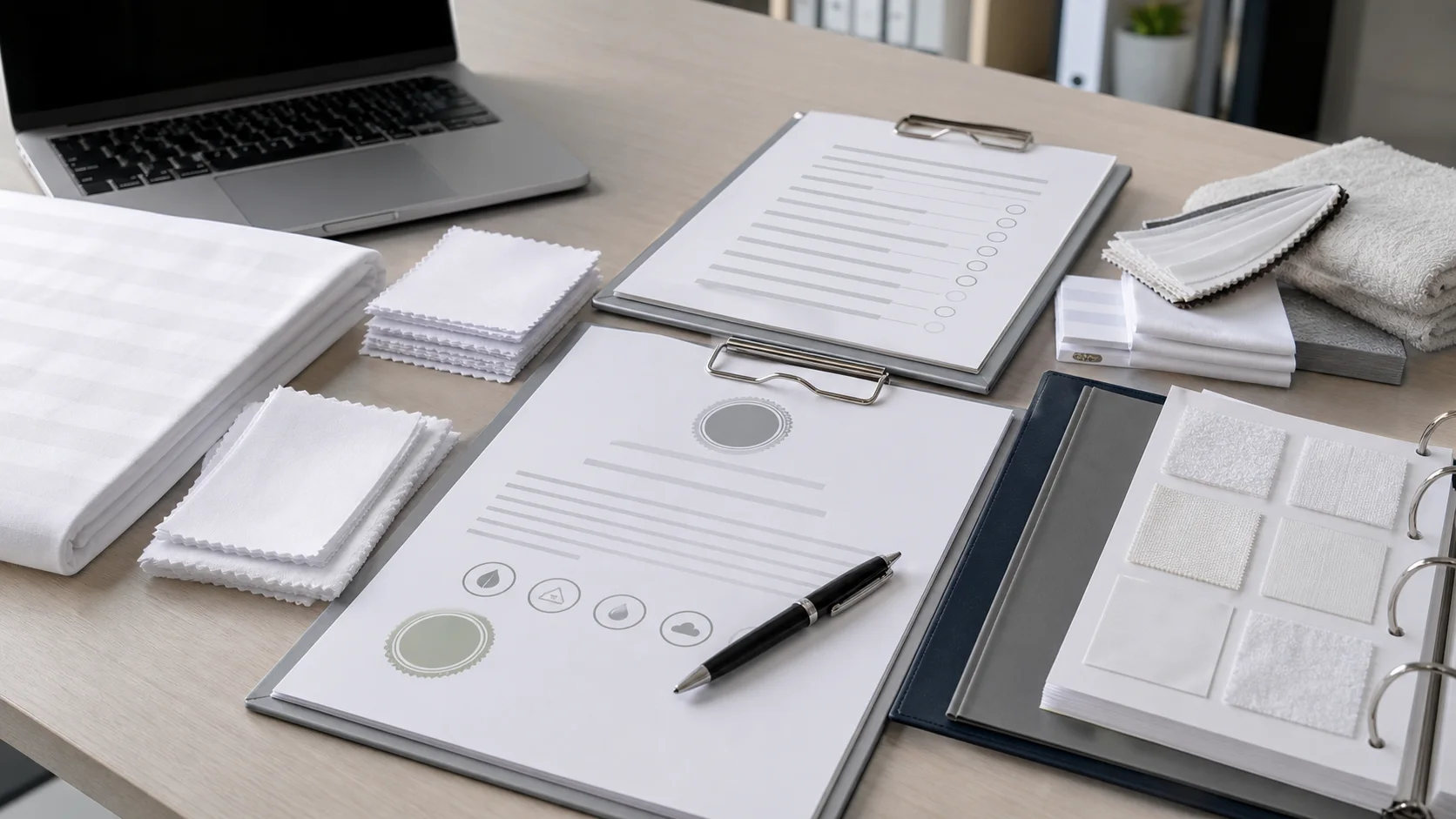
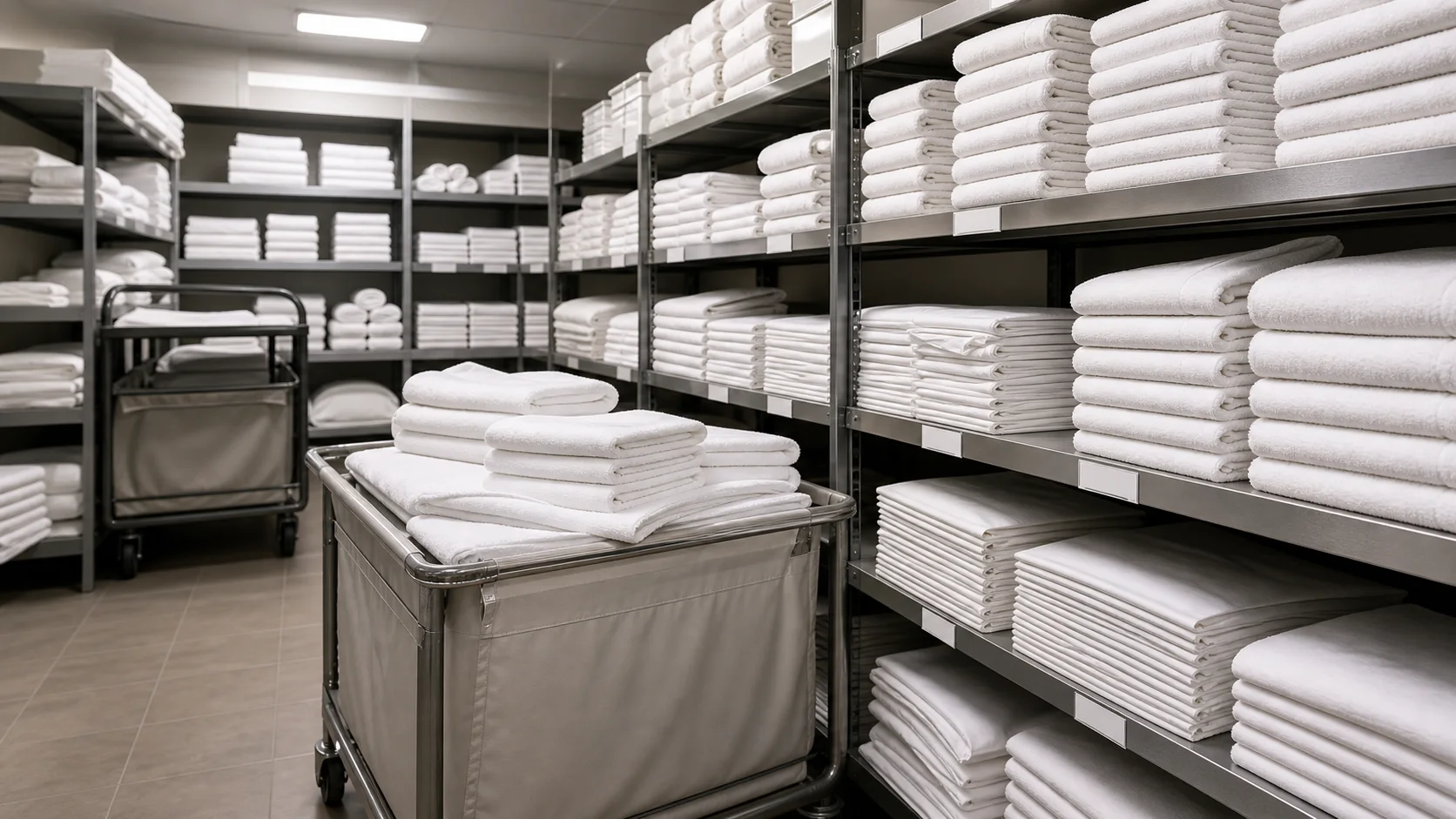
Materials and operations, shown together.
Product detail and back-of-house context help connect each specification choice to how the item looks, launders, stores, or survives service.
Hotel Linen Par Stock Guide: How Much to Order & When to Replace
Run too little linen and your housekeeping team stalls. Rooms sit unready and guests wait. Run too much and you tie up cash, crowd the storeroom, and pay to handle stock that never earns its keep. What keeps a property on the right side of that line is par stock management: knowing exactly how many sets of every linen item you need in circulation, and when each piece has reached the end of its useful life.
Here’s what you’ll get below. What “par” actually means on the floor, how to calculate the right hotel linen par levels for your property, how your laundry model and occupancy change the math, and how to plan replacement cycles, shrinkage allowance, rotation, and storage so your inventory works as hard as your team does.
Key takeaways
- Par is one complete set of linen needed to outfit every bed and bath in the hotel. Most properties carry 3 to 4 par so linen is always on the bed, in the wash, and on the shelf.
- The core formula is simple. Rooms × pieces per room × par level = total inventory for each linen item.
- On-site laundry can run leaner, often 3 par. Outsourced laundry and high occupancy usually need 4 par or more to cover turnaround time.
- Plan replacement by wash cycles, not the calendar. Sheets and pillowcases typically last a few hundred industrial washes. Towels and duvet covers vary by quality and care.
- Always add a shrinkage and loss allowance when ordering, rotate stock FIFO, and store linen clean, dry, and rested to extend its life.
What “Par” Means in Hotel Linen Management
In hospitality, one par is a single full set of linen, enough to make up every bed and stock every bathroom in the hotel exactly once. If you run 100 rooms, one par of bath towels is the number of bath towels needed to place the correct quantity in all 100 rooms at the same time.
You never actually operate on a single par, though. At any given moment your linen is in three or four places at once, and your total stock has to cover all of them at the same time.
The 3-Par and 4-Par Rule of Thumb
The standard industry guideline breaks down like this:
- 1 par on the bed or in the room. The linen currently in service.
- 1 par in the laundry. Being washed, dried, ironed, or in transit.
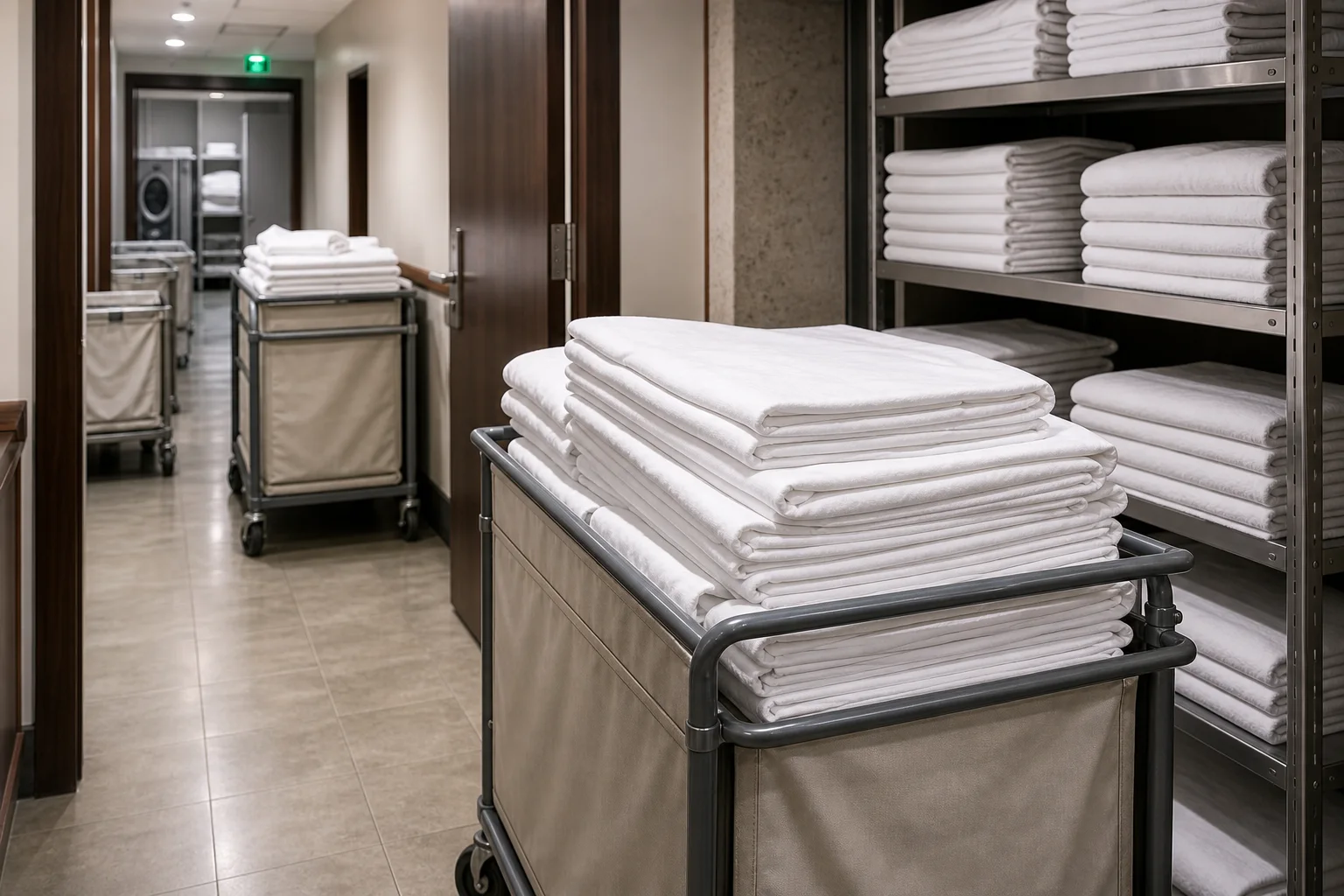
- 1 par on the shelf. Clean, folded, and ready for the next turn.
- +1 par buffer. A reserve for spikes in occupancy, delayed laundry, damage, loss, and rotation out of worn stock.
Three par is the practical floor for a functioning operation. Adding the fourth par as a buffer is what most quality-focused and busier properties do to absorb real-world swings without ever running short. Some resorts and luxury properties carry 5 par or more on high-turn items.
How to Calculate Hotel Linen Par Levels
The calculation works the same way for every item: sheets, pillowcases, duvet covers, bath towels, hand towels, washcloths, bath mats. Start with what a single room actually uses, then scale up.
The formula:
Number of rooms × Pieces per room × Par level = Total inventory needed
Step 1: Define Pieces Per Room
List how many of each item one room requires when fully made up. A typical king room might use 1 fitted sheet (or flat as base), 1 top sheet, 1 duvet cover, 4 pillowcases, 2 bath towels, 2 hand towels, 2 washcloths, and 1 bath mat. Your spec depends on room type and bedding standard, so build the list from your own setup.
Step 2: Multiply Across the Property
Take each item, multiply by the number of rooms, then multiply by your chosen par level.
Step 3: Worked Example
For a 100-room property at 4 par, the inventory targets look like this:
| Linen Item | Pieces / Room | × 100 Rooms (1 par) | × 4 Par = Total to Own |
|---|---|---|---|
| Flat/fitted sheets | 2 | 200 | 800 |
| Duvet covers | 1 | 100 | 400 |
| Pillowcases | 4 | 400 | 1,600 |
| Bath towels | 2 | 200 | 800 |
| Hand towels | 2 | 200 | 800 |
| Washcloths | 2 | 200 | 800 |
| Bath mats | 1 | 100 | 400 |
The same property at 3 par would own 600 sheets instead of 800, and so on down the column. The gap between 3 and 4 par is your safety margin. It’s the cushion that keeps the storeroom from running dry during a sold-out weekend or a laundry delay.
What Changes the Right Par Level
The 3-to-4 par rule is a starting point, not a fixed answer. Three operational factors push your number up or down.
Laundry Model: On-Site vs. Outsourced
- On-site laundry gives you fast turnaround. Linen can be back on the shelf the same day. Properties with an efficient in-house laundry can often run safely at 3 par.
- Outsourced or commercial laundry adds collection, processing, and delivery time, often a full cycle of one to several days. That linen-in-transit gap usually demands 4 par or more so you’re never stuck waiting on a truck.
Occupancy and Turn Volume
Higher occupancy means more linen in the wash at once and less time to recover. A property that regularly runs at 85 to 95% occupancy needs more buffer than one averaging 55%. Your stayover-to-checkout mix matters too. Full checkouts generate far more linen turns than guests who extend their stay.
Turn Time and Service Standard
Same-day turns, multiple daily towel changes, turndown service, and pool or spa linen all push consumption per room higher. The faster and richer your service, the more par you need to keep pace without cutting corners on quality.
Replacement Cycles: When to Retire Linen
Linen wears out by use, not by date. The most useful way to plan replacement is by wash cycles (industrial launderings), because heat, agitation, and chemistry are what age a textile, not the months on a calendar.
The figures below are typical industry ranges. Actual lifespan depends heavily on fabric quality, GSM, blend, water chemistry, and laundry care, so treat them as planning guides, not guarantees:
| Item | Typical Wash-Cycle Lifespan | Notes |
|---|---|---|
| Bed sheets | ~150 to 250 washes | Friction and bleaching thin the weave over time |
| Pillowcases | ~150 to 250 washes | Wear closely with sheets; often replaced as a set |
| Duvet covers | ~150 to 300 washes | Closures and seams often fail before the fabric |
| Bath towels | ~200 to 500 washes | Higher-GSM cotton generally lasts longer |
| Bath mats | ~150 to 300 washes | Heavy foot traffic and grit accelerate wear |
A well-run property tracks roughly how many turns its stock has seen and budgets to refresh a portion of inventory each year rather than replacing everything at once. That smooths both your cash flow and your quality.
Signs Linen Should Be Retired: Checklist
Even before a piece hits its wash-cycle estimate, pull it from service when you see:
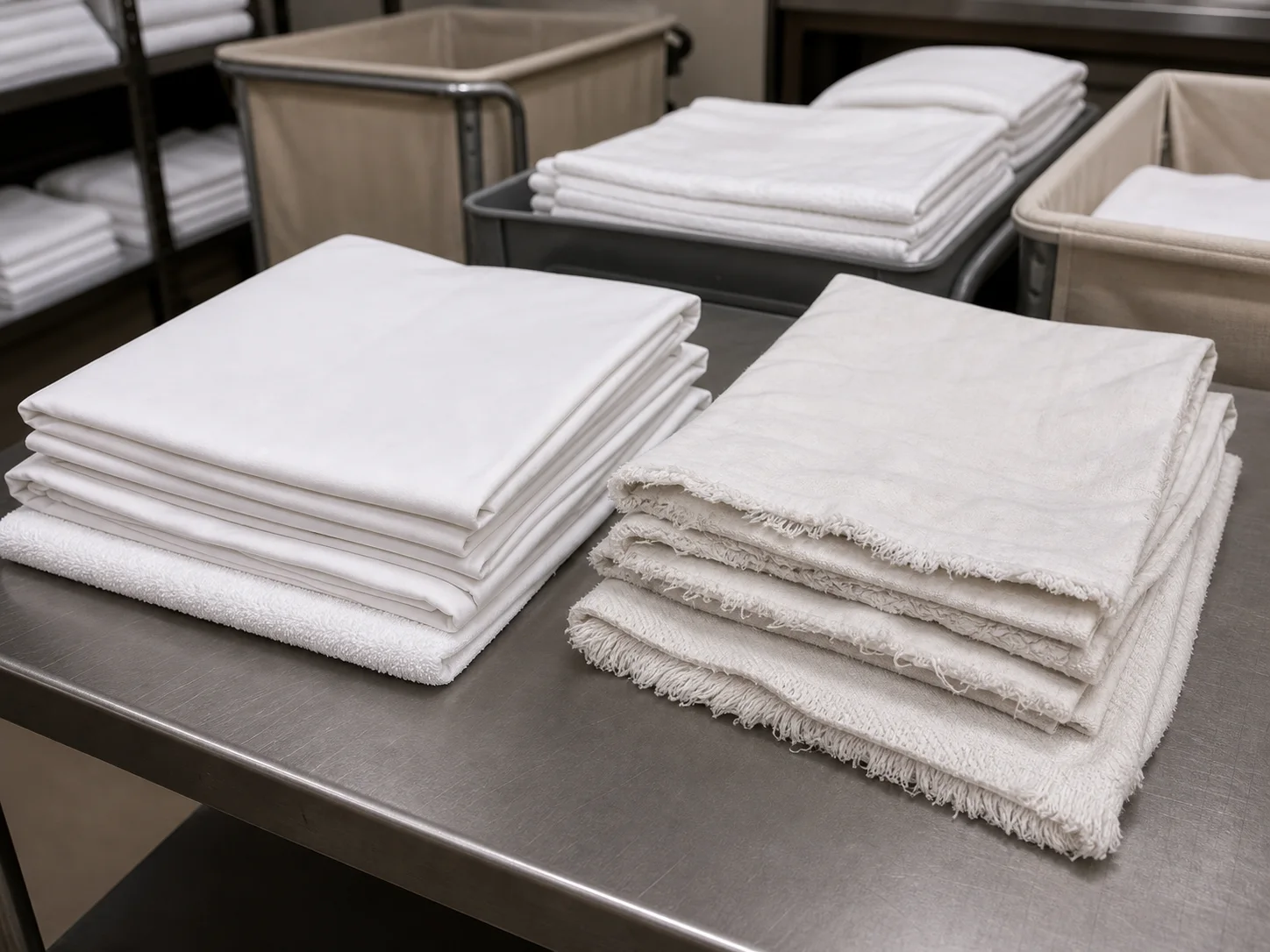
- Graying or yellowing that no longer washes out to a clean white.
- Thinning or transparency. Hold it to the light; visible weave breakdown means it’s done.
- Fraying hems or edges, pulled threads, or pilling that won’t brush off.
- Permanent stains from makeup, oils, ink, or rust spots that survive normal laundering.
- Snags, tears, or thin patches in the body of the fabric.
- Failed closures on duvet covers (broken buttons, ties, or zippers).
- Loss of softness or absorbency in towels that no longer perform for guests.
Here’s the quick rule. If you wouldn’t want to sleep in it or dry off with it as a guest, retire it. Worn linen quietly drags down your review scores long before it ever falls apart.
Ordering Smart: Shrinkage, Loss, and Buffer
The inventory you calculate is what you need in working condition. The quantity you actually order should be higher, because every linen program loses pieces along the way.
- Shrinkage allowance: Cotton and cotton blends shrink with industrial washing and high-heat drying, commonly in the low-single-digit to high-single-digit percent range depending on fabric and finish. Order sizes that account for shrinkage so a “king” sheet still fits a king after laundering, and add a small percentage of extra pieces to cover the gradual fade-out of stock.
- Loss and damage: Linen disappears. Guest take-home, miscounts, transit losses, and items condemned mid-cycle all chip away at your count. A modest annual loss rate is normal, so bake it into your reorder quantities.
- Lead time: Custom and OEM linen carries production and shipping lead time. Reorder before stock dips to par, not after, so replacements land while you still have a working buffer.
Stock Rotation: Use FIFO
Treat your linen room like a well-run pantry and work First In, First Out (FIFO). Place freshly laundered or newly delivered linen at the back of the shelf and draw from the front, so every piece ages evenly. Skip FIFO and the same accessible stacks get hammered constantly while reserve linen sits untouched. One batch wears out early while another never earns its keep. Even rotation also makes wear predictable, which makes your replacement budgeting far more accurate.
Storage Best Practices
How you store linen between turns directly affects how long it lasts:
- Clean, dry, and ventilated. Damp storage invites mildew and odors that can condemn otherwise good linen.
- Off the floor and off the wall. Use shelving with airflow and avoid pressing stacks against exterior walls where condensation forms.
- Let linen “rest.” Letting freshly laundered pieces cool and relax before they go back into service reduces fiber stress.
- Climate control. Keep storerooms cool and stable. Heat and humidity degrade fibers and yellow your whites.
- Separate by type and condition. Keep par stock, buffer stock, and condemned-but-not-yet-replaced linen clearly apart to protect FIFO discipline.
- Limit light exposure. Prolonged direct sunlight can yellow and weaken stored whites.
Budgeting and Total Cost of Ownership
Par stock is a recurring capital line, not a one-time buy. The smartest way to budget is around total cost of ownership (TCO), not just the per-piece purchase price.
A cheaper sheet that survives 150 washes and grays early costs you more per use than a higher-quality sheet that holds up for 300 washes and still looks crisp. Durable, higher-GSM, well-constructed linen also means fewer mid-cycle replacements, fewer guest complaints, and less laundry rework. So when you compare suppliers, weigh expected wash-cycle lifespan, colorfastness, and shrinkage behavior alongside price. That’s where the real savings live. Spending on quality at the par-stock level lowers your cost per night over the whole life of the inventory.
Frequently Asked Questions
What does “par” mean for hotel linen? One par is a single complete set of linen needed to outfit every bed and bathroom in the hotel at once. Hotels carry multiple par, typically 3 to 4, so linen is always in service, in the wash, and on the shelf at the same time.
How many par of linen should a hotel keep? Most properties keep 3 to 4 par: one on the bed, one in the laundry, one on the shelf, and a fourth as a buffer for occupancy spikes and turnaround delays. On-site laundries can sometimes run at 3 par. Outsourced laundry and high occupancy usually call for 4 par or more.
How do I calculate how much hotel linen to order? Use rooms × pieces per room × par level for each item. For example, 100 rooms × 2 bath towels per room × 4 par = 800 bath towels to own. Then add a shrinkage and loss allowance on top of that working total.
How often should hotel linen be replaced? Plan replacement by wash cycles, not the calendar. Sheets and pillowcases typically last a few hundred industrial washes, while towels can run longer depending on quality and care. Retire any piece earlier if it grays, thins, frays, or holds permanent stains.
What is FIFO in linen management? FIFO (“First In, First Out”) means using your oldest clean linen first by stocking new linen at the back of the shelf and pulling from the front. It spreads wear evenly across the whole inventory and makes replacement budgeting more predictable.
Should I add extra when ordering to account for shrinkage? Yes. Cotton and cotton blends shrink with industrial laundering, so order sizes and quantities that account for shrinkage and gradual stock loss. That way a king sheet still fits after washing, and your par stays full as older pieces are retired.
Smart par planning starts with linen that holds its size, color, and strength wash after wash. If you’re sizing a new inventory or refreshing an existing one, request fabric samples, a full product catalog, or a custom quote from a hospitality supplies supplier. Compare wash-cycle durability, build the right par for your property, and protect your cost per night for years to come.
Internal links: How to Choose Hotel Bed Linen, Hotel Towel GSM Buying Guide, Sustainable Hotel Linen Guide